
AI in Web Design: The Tools, the Limits and the Future.
Julio Arango · 13 min read · Updated August 2026

You can now describe a business in a sentence and use AI to generate a website in under a minute. The result is competent, fast, and looks like every other site produced the same way, which is the whole story of AI in web design in one paragraph.

This guide covers what AI actually does in website design today, which AI tools are worth your time, whether ChatGPT can design a website, what an AI website builder gets right and wrong, and the honest answer to the question every designer is asked at dinner parties.
What AI in Web Design Actually Means
Artificial intelligence shows up at four different points, and confusing them is why the conversation gets muddled.
Generation. An AI website builder takes a prompt and will generate website layout, copy, images and structure in one pass. Wix, Hostinger, Framer and others all offer some version of this, and each promises to build the perfect website from a paragraph.
Assistance inside tools. AI features inside Figma and similar design tools that rename layers, generate variants, fill placeholder content or turn a sketch into design elements. This is where AI design sits in most working designers' workflow today.
Code. AI-powered tools like Cursor, GitHub Copilot and v0 write markup and styles from a description or a picture. Vibe coding, the practice of building by prompting rather than typing, came out of this and is genuinely useful for prototypes.
Operation. AI running on the finished site: a chat assistant, an AI agent handling routine questions, search, recommendations, personalization based on behavior. This is the layer that changes user experience after launch.
Only the first of those is what most people picture, and it is the one with the widest gap between demo and result.
How AI Works in the Web Design Process
The underlying mechanism matters because it explains the limits. These systems learn patterns from enormous amounts of existing work and produce plausible continuations of those patterns. That makes them excellent at conventions and poor at intent.
In practice, that plays out like this:
- Layout. AI algorithms produce structurally sound arrangements very quickly, because layout conventions are well represented in the training data.
- Copy. A model will write serviceable headings and body text in seconds, using natural language you then have to make specific.
- Images. An AI image model produces illustration, texture and stock replacements on demand.
- Code. A description becomes working markup, often faster than a person can type it.
- Testing. AI can generate variants, summarize analytics, check SEO basics and flag where website performance is dropping.
What none of that produces is a reason for the site to exist. The model has no idea what makes your business worth hiring, because that information was never in the pattern.
The AI Tools Worth Knowing
The list changes constantly. These categories do not.
AI website builders
Wix has the most mature AI site builder for non-designers: answer a few questions and it will generate a website with copy and images in place. Hostinger and Squarespace offer comparable AI website generator features, and most offer free plans, a free domain for a year, and a one-click way to publish your website.
Framer sits a level up, aimed at people who want more control over the output and a more current visual result.
A free website from one of these is the right answer when the alternative is no website at all, or when you need a landing page live this week.
AI inside design tools
Figma has added AI features that speed up the repetitive parts of the web design process: generating variants, renaming layers, filling realistic content. They save hours in the design and development workflow and change nothing about the design decisions, which is exactly the right division of labor.
AI for code
v0, Cursor and GitHub Copilot turn descriptions or screenshots into working components. For anyone doing web development this is a real productivity change, and it is the fastest way to build sites from a rough idea. For a non-developer it produces something that looks finished and is difficult to maintain, which is a trap worth naming.
AI for content and images
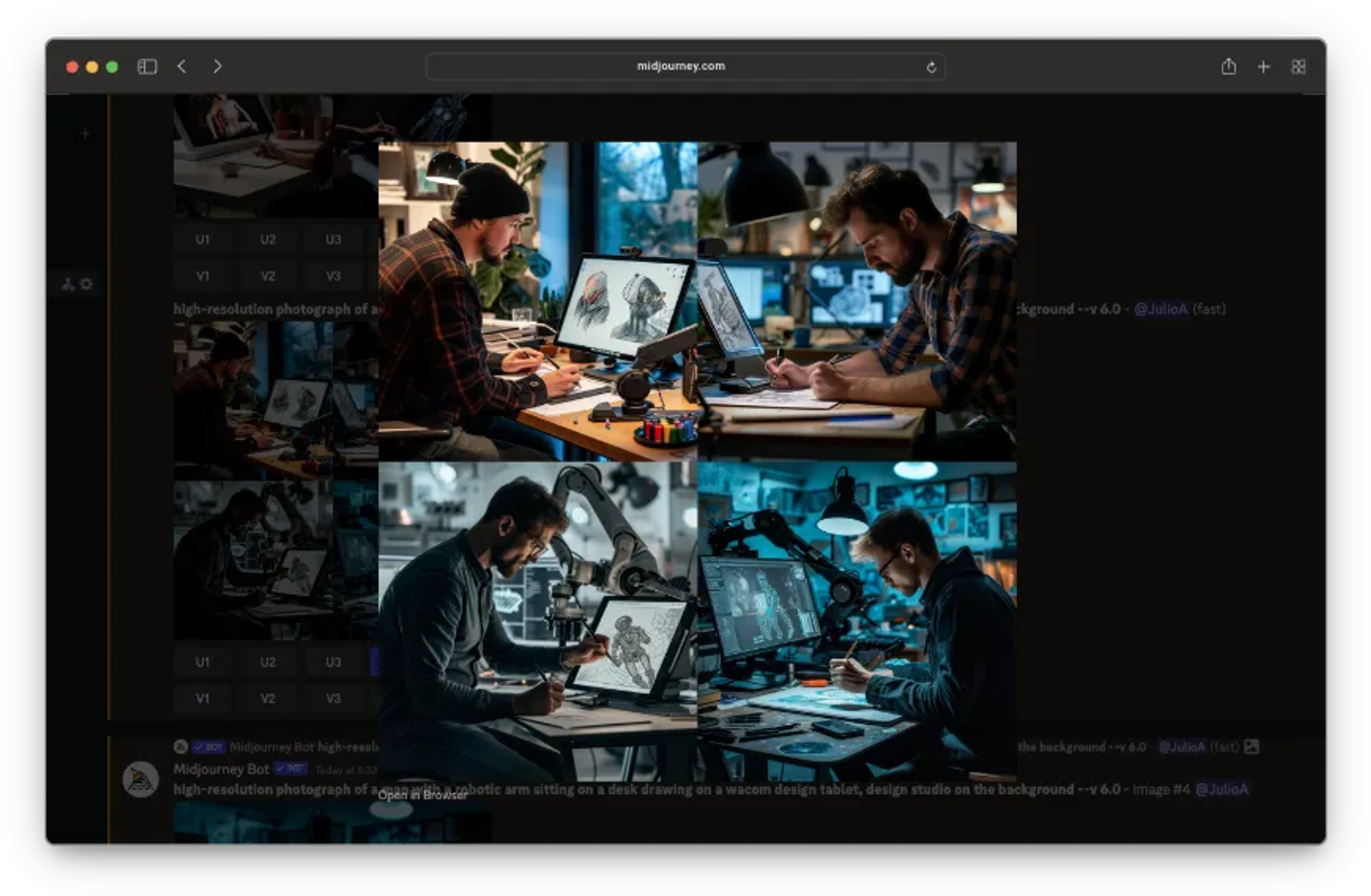
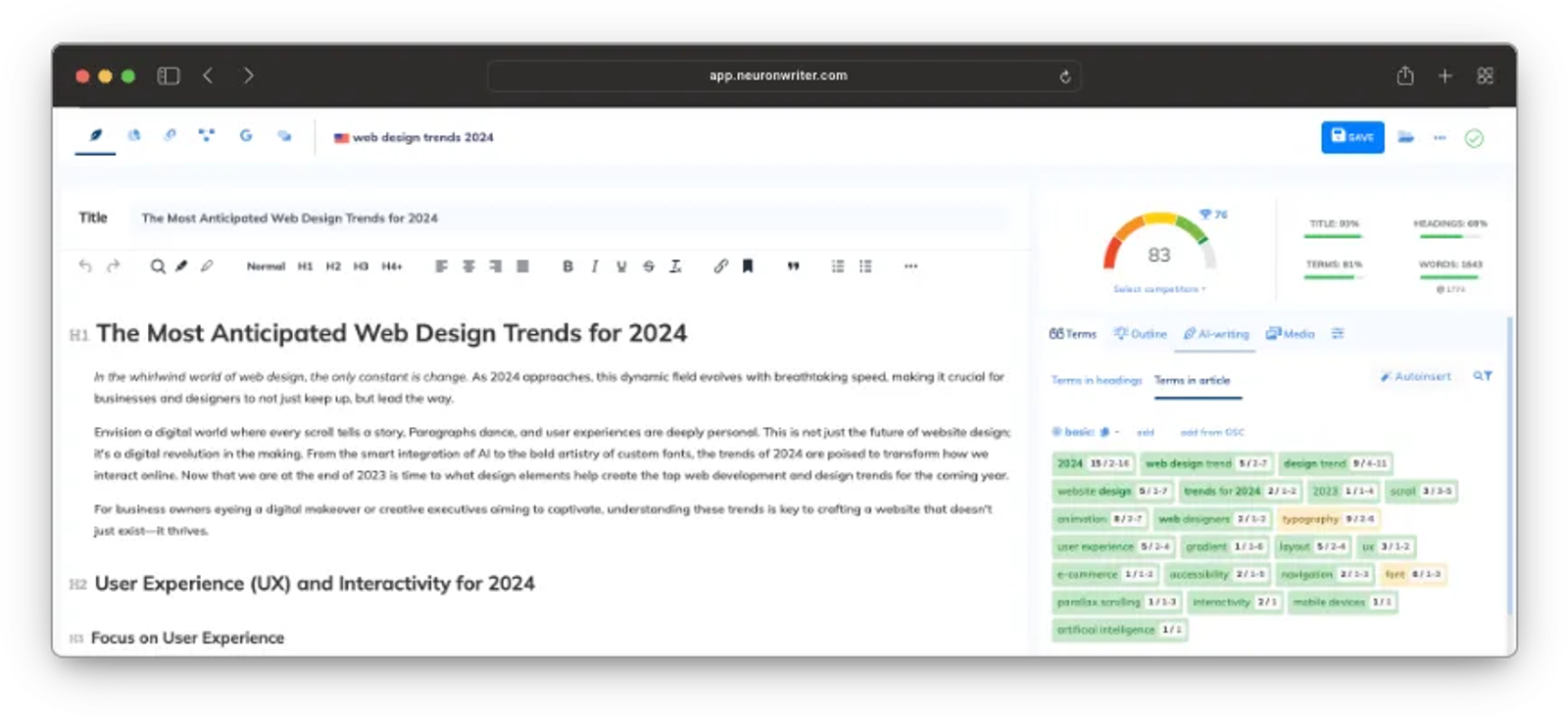
ChatGPT and Claude for drafting copy, alt text and structured data. Midjourney and similar for imagery. Both are useful for the first eighty percent, and advanced AI still cannot tell you whether the result is good design.
Can ChatGPT Design a Website?
Partly, and not in the way the question implies.
ChatGPT can write the HTML and CSS for a page, produce the copy, suggest a structure, generate a color palette and explain its reasoning. Ask it to build a website with AI assistance and you will get something that runs.
What it cannot do is decide what kind of website you need. It does not know your margins, which service you actually want more of, which objection kills your deals, or what your competitors already look like. Give it those answers and it becomes a fast collaborator. Withhold them and it produces the average of the internet.
The practical use for most business owners is narrower and more valuable: use AI to create the first draft of a page, then spend your time on the parts only you can supply.
How to Create a Website Using AI
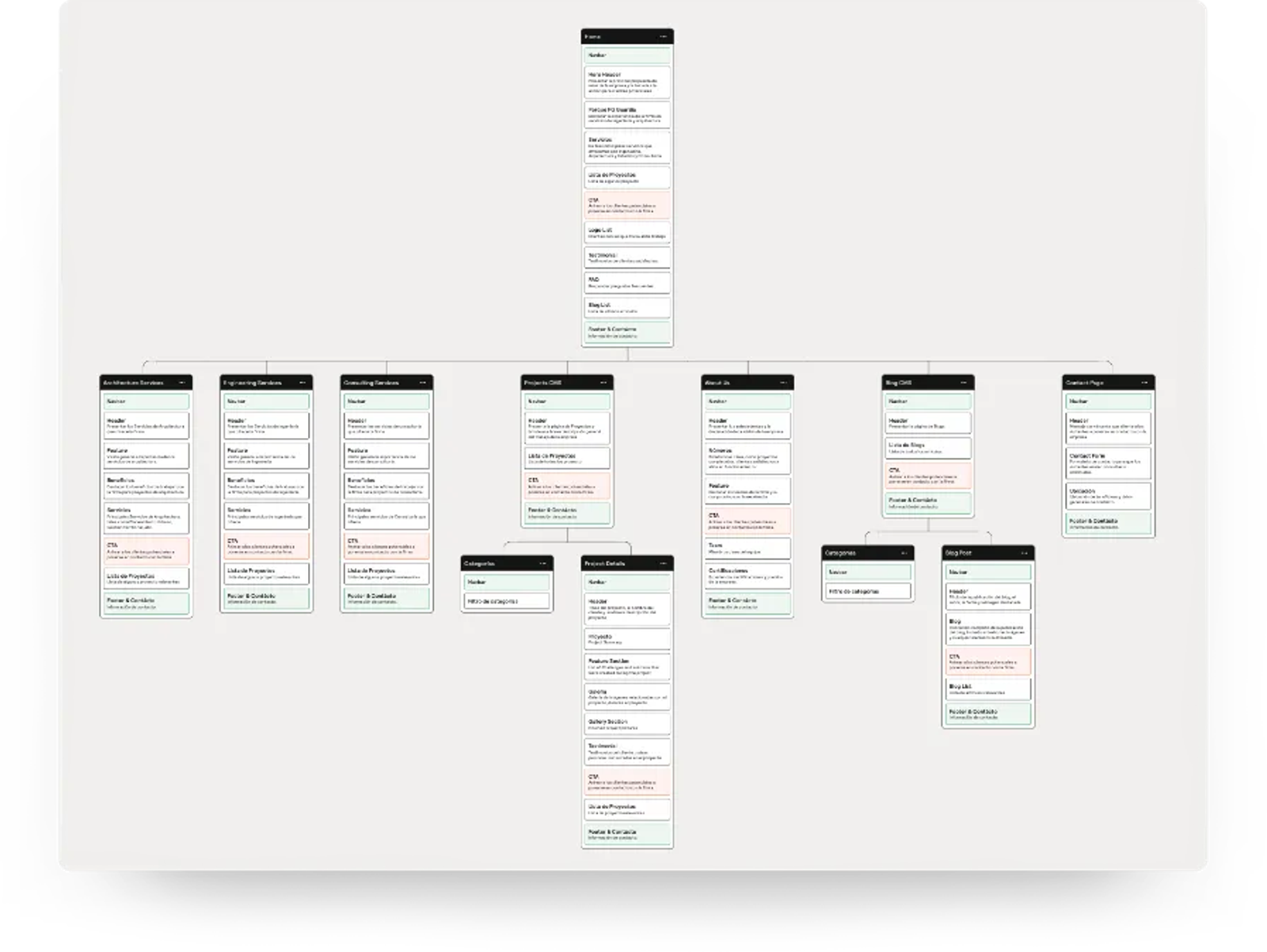
If you want to use AI to build a site, this sequence produces the best result.
- Write the strategy yourself. Who it is for, what they need, what you want them to do. AI cannot originate this and everything downstream depends on it.
- Generate a first structure. Ask an AI tool for a page outline based on your strategy. Reject anything generic.
- Draft the copy with AI, edit it entirely. Feed it your real material: past proposals, call transcripts, your brand voice guidelines. Generic input produces AI-generated text that reads exactly like AI-generated text.
- Use an AI website builder or a template for the build. Then customize it hard. AI website design gives you a starting point, and the default output is the part everyone else also has.
- Replace the imagery. Stock and generated images are the fastest way to look like a business nobody can verify. Upload original content wherever you can.
- Refine, test and measure. Check it on a phone, check the load time, check that the primary action works against normal best practices. AI can help you spot problems; it will not care whether you fix them.
The Benefits of Using AI in Web Design
- Speed. AI helps most here: what took a week of website building takes a day. For a small team this is the difference between shipping and not.
- A cheaper starting point. A free AI website builder gets a business online for almost nothing, which is genuinely valuable when the alternative is a Facebook page.
- Fewer repetitive hours. Alt text, meta descriptions, variant generation, resizing. The work nobody enjoys.
- Faster exploration. Ten layout directions in an hour means better design decisions, because you are choosing rather than defending the first idea. Use AI tools for the exploring and keep the deciding.
- Accessibility help. AI can flag contrast problems and missing alt text quickly, though it will not judge whether the fix is any good. This is the practical power of AI in web design and development: it finds, you decide.
The Limitations and Challenges
Sameness. Models produce the middle of their training data. That is a real problem for anyone whose business depends on not looking like everyone else.
Confident errors. Generated copy states things that are not true about your business, and generated code contains patterns that look right and are not.
Maintainability. AI generated code tends to work once. Six months later, when something needs changing, nobody understands why it was built that way, and there is no design system underneath to fall back on.
Strategy. AI optimizes what you ask for. Deciding what to ask for is the actual job, and it is the part that determines whether the site earns anything.
Brand. A generated site has no point of view, because a point of view is precisely what an averaging process removes. It applies design principles competently and believes nothing. Our guide to brand identity covers what has to come from you.
Content ownership. Know what rights you have over generated imagery and text before you build a brand on it.
Will AI-Generated Websites Be Unique or Generic?
Generic, by default and by design. A model trained on existing work produces work that resembles existing work, and a prompt that any competitor could also write produces a result any competitor could also get.
That is not fatal. It sets where the effort has to go in AI web design. A unique design now comes from the inputs nobody else has: your positioning, your real photography, your actual client results, your own opinions. Everything an AI can generate from a generic prompt is, by definition, available to everyone.
For a business competing on expertise, this changes the calculation rather than removing it. When the baseline gets cheap, being distinctive gets more valuable, not less.
Is AI Going to Take Over Web Design?
Not in the way the question assumes, though a lot of the work is changing hands.
The parts of web design that were always production, turning an approved layout into markup, resizing assets, writing boilerplate, are moving to machines and will keep moving. That is a genuine shift and anyone whose value was in production should take it seriously.
The parts that are not moving are judgment about what the business needs, what to leave out, what will make a specific buyer trust a specific company, and the accountability for whether it worked. A design agency that only shipped layouts is under pressure; one that makes decisions is not. Those require context a model does not have and consequences it does not bear.
The honest summary: AI is taking over web production. The future of web design, in the sense of deciding what should exist and why, still belongs to people. The future of AI here is as a very fast pair of hands.
Is AI Replacing UI/UX Design?
The same answer with a sharper edge. AI is very good at producing interface patterns, because interface patterns are conventions and conventions are what these systems learn best.
What it does not do is talk to users, notice that people keep abandoning a form for a reason nobody wrote down, or decide that a feature should not exist. Research, synthesis and the judgment to remove things remain human work.
Designers who use AI for the production layer and spend the saved time on research will build better web experiences than before. Designers who compete with it on speed will lose.
How Much Does an AI-Generated Website Cost?
An AI site builder runs from free to roughly twenty or thirty dollars a month, usually including hosting and a free domain for the first year. That is the whole cost of website creation for a small business site.
Choosing to build custom, with strategy, original design and a real build, sits in a different bracket entirely, and the question is what the site is expected to earn. For a business selling five-figure engagements, the site is a sales asset and the calculation is straightforward. For a business testing whether an idea has customers, an AI-generated website is the correct answer.
The mistake is paying custom prices for AI generated output, or expecting AI generated output to do a custom job.
Questions About AI in Web Design
Which AI is best for web design?
It depends on the job. Wix or Hostinger for a complete site from a prompt, Framer for more control, Figma for design work, v0 or Cursor for code, ChatGPT or Claude for content. There is no single best AI website builder, only the right tool for your starting point.
Can AI build a professional website?
It can build a competent one. Building a site with AI gets you a professional-looking result, and professional in the sense of a clear position and real proof still depends on what you feed it and how much you edit. The generation is the easy part.
Will AI make web designers obsolete?
No, though it changes what they are paid for. The value moves from execution to judgment: what to build, what to cut, and why. Designers who only executed are the ones under pressure.
How does AI improve website performance?
Mostly through analysis rather than generation: flagging slow assets, suggesting compression, summarizing analytics, checking SEO basics, generating test variants. The fixes themselves are still engineering decisions.
Should I use AI for my business website?
Yes, for parts of it. Use it for first drafts, repetitive work and exploration. Keep the strategy, the positioning, the proof and the final edit under your own control, because those are the only parts a competitor cannot also generate.
What is vibe coding?
Building software by describing what you want to an AI rather than writing the code yourself. It is genuinely fast for prototypes and experiments. For anything you plan to maintain for years, someone still needs to understand what was built.
Where This Leaves an Expert-Led Business
The floor has risen. Every competitor can now produce a decent-looking site quickly, which means a decent-looking site no longer distinguishes anyone. What distinguishes you is the same thing it always was, and it is now the only thing left: a clear position, real proof, and a site built around how your business actually earns.
That is the work we do at Dancing Pels through Custom Websites, where AI handles the production it is good at and the decisions stay with people who are accountable for the outcome. Where AI genuinely changes the economics of a small business is in operations rather than pixels, which is AI Systems, and the marketing side of the same shift is covered in how to use AI in marketing, and the visibility side of it is covered in how to get your business recommended by ChatGPT.
If you are weighing an AI-generated site against a custom one, book a discovery call and we will tell you honestly which your business needs.