Choosing the Right Type of Website for Your Business.
Julio Arango · 13 min read · Updated August 2026

Most business owners do not need a bigger website. They need the right type of website, built for the one thing their customers actually come to do.
Picking the wrong website type is expensive in a quiet way. You end up paying for an online store nobody buys from, or running a blog website when what you needed was a booking website. This guide covers the common website types, what each one is for, how to choose the best type of website for your business, and whether you can combine several.
Why the Type of Website Matters
A website type is a decision about purpose before it is a decision about website design. It determines the structure, the features, the cost to build, the cost to run, and what success looks like.
Get it right and the website is designed around one job, so every page pushes toward it. Get it wrong and you spend two years adding pages to compensate for a shape that was never suited to your business.
Three questions decide it: what should a visitor do here, what do they need to know first, and how will you know it worked.
The Common Types of Websites
Some lists give 9 types of websites and others stretch to 28 types of websites. These are the types of websites to consider for most types of business, with what each one is for and the features that matter.
1. Business or brochure website
The default. A small set of pages explaining who you are, what you offer, and how to get in touch. Usually five to eight pages: home, services, about, work, contact.
Best for: professional services, consultancies, agencies, trades, anyone whose sale happens in a conversation.
Essentials: clear service pages, real proof, a single obvious next step, and fast pages. Informational websites like this exist to build trust before the first call.
2. Marketing website
A business site built around generating inquiries rather than just describing the business. Same shape, different intent: every page has a conversion path, content supports search visibility, and results are measured.
Best for: an established business that wants the site to produce pipeline rather than serve as a business card.
Essentials: conversion tracking, service pages aimed at real search demand, and a booking flow.
3. E-commerce website
An online store that takes payment for a product or service. An ecommerce website carries product pages, a cart, checkout, inventory and fulfillment, and it is the most operationally demanding type on this list.
Best for: anyone who wants to sell products or services in a transactional way, at volume.
Essentials: search and filtering, high-quality product photography, trustworthy checkout, and a returns policy people can find.
4. Portfolio website
A portfolio website exists to show work. Photographers, designers, architects, studios and freelancers use it to let the work do the arguing.
Best for: visual professionals whose output is the strongest sales argument they have.
Essentials: large images, fast loading, sensible categories, and a contact route from every project page.
5. Blog website
A publication built around regular articles. If you start a blog it can be the whole website or one section of a larger business website, and in most cases it should be the latter.
Best for: businesses building search visibility and authority over time.
Essentials: a clean reading experience, categories, an email signup, and a realistic publishing rhythm.
6. Landing page
A single page with one offer and one action, usually the destination for an ad or a campaign. It has no navigation, because navigation is an escape route.
Best for: paid campaigns, launches, lead magnets, webinar signups. One-page websites follow the same logic when the whole business fits on one screenful.
Essentials: one message, one call to action, social proof, and nothing else. Our guide to call to action buttons covers the part that matters most.
7. Booking website
Built around scheduling. The visitor's goal is to reserve time, and everything else on the site exists to get them comfortable enough to do it.
Best for: clinics, studios, consultants, restaurants, service providers who sell appointments.
Essentials: a calendar that works on a phone, transparent availability, reminders, and as few steps as possible.
8. Membership and subscription website
Content or services behind a login, paid monthly or annually. Membership websites need account management, billing, and a reason to stay subscribed.
Best for: course creators, communities, publications, software.
Essentials: a clear free-to-paid boundary, painless billing, and content that keeps arriving.
9. Directory website
A searchable list of businesses, people, properties or products. A directory website makes money from listings, subscriptions or advertising rather than from selling anything itself.
Best for: niche marketplaces, industry associations, local guides.
Essentials: strong search and filters, a submission process, and enough listings to be useful on day one.
10. Educational website
Courses, lessons and structured learning. An educational website usually overlaps with membership, since most course businesses charge for access.
Best for: trainers, school websites, and experts productizing what they know.
Essentials: progress tracking, video hosting that works, and downloadable resources.
11. Event website
Built for one date. An event website carries the programme, the speakers, the venue and the registration, and it is judged entirely on how quickly someone can buy a ticket.
Best for: conferences, workshops, weddings. Wedding websites are the most common personal version of this shape, and memorial websites are a quieter one.
Essentials: dates and location above everything, a schedule, and registration that works on a phone.
12. Personal website
A single person's presence online: bio, work, writing, contact. A personal website is the anchor for anyone building a reputation in their own name, which is the subject of our guide to building a personal brand.
Best for: founders, consultants, speakers, writers.
Essentials: a clear positioning line, proof, and a way to get in touch.
13. News, magazine and entertainment websites
High-volume publishing with editorial structure. News websites, magazine websites and entertainment websites live on advertising, subscriptions or both. These are dynamic websites in the technical sense: pages assembled from a database rather than written one at a time.
Best for: publishers and media businesses.
Essentials: editorial workflow, fast pages under load, and a strong archive structure.
14. Nonprofit websites
Built to explain a cause and collect support. Nonprofit websites combine an informational site with donation handling and volunteer signup.
Best for: charities, foundations, associations.
Essentials: a donation flow with as little friction as a checkout, plus transparent reporting.
Website vs Landing Page: What Is the Difference?
A website is a set of connected pages a visitor can navigate freely. A landing page is one page with one purpose, usually with the navigation deliberately removed.
The distinction matters because they are measured differently. A website is judged on the whole journey; a landing page is judged on one conversion rate. Sending paid traffic to a homepage instead of a landing page is one of the most common and most expensive mistakes in small business marketing.
How to Choose the Right Type of Website for Your Business
Work through these five questions in order.
1. What is the single action you want? Book a call, buy a product, submit an application, subscribe. If you cannot name one, that is the problem to solve before choosing a website type.
2. How does the money actually arrive? A business that closes on a call needs a business website with a booking flow, not an online store. A business that needs to sell products at volume needs an ecommerce website. Match the shape to the transaction.
3. Who is the visitor and what do they need first? A prospective client needs proof and clarity. A returning customer needs to find something fast. Different people, different structure.
4. What can you sustain? A blog you post to twice a year damages credibility. A directory with forty listings looks abandoned. Choose the website type you can keep alive.
5. What is the budget over three years, not three months? An ecommerce website costs more to run than to build. A membership site needs support. A brochure site is cheap to keep and cheap to ignore. Whichever is best for your business, price the running cost first.
The most common answer for an expert-led service business is a marketing website with a booking flow, a handful of strong service pages and a blog. It is unglamorous and it works, because it matches how the business actually earns.
Can a Business Website Combine Multiple Types?
Yes, and most good ones do. A business website with a blog, a portfolio section and a booking page is combining several different types of websites, and that is normal. Different types of business websites overlap far more in practice than any list suggests.
Two rules keep it from getting messy.
One primary purpose. Decide what the website is for and let the other sections support it. A portfolio inside a marketing website is proof; a marketing site inside a portfolio is confusion.
Add sections when they earn their place. Multiple types on one site should arrive one at a time, each because there is demand for it. Building all of them at launch produces a site with several half-finished areas.
Essential Features by Type
Modern websites need the same foundation regardless of type: a clear structure, mobile-friendly pages, fast loading, working analytics and an obvious contact route. On top of that, each type has its own requirements.
- Business and marketing websites need service pages, proof and a booking or contact flow.
- E-commerce websites need product search, secure checkout and inventory that stays accurate.
- Portfolio websites need image performance and project pages that end with a way to make contact.
- Blog websites need categories, an author byline, a plan for content types, and internal links between related articles.
- Booking websites need a calendar that behaves on a phone and automated reminders.
- Membership websites need account management and recurring billing.
- Directory websites need filtering that actually narrows results.
Cost and Difficulty
The easiest type of website to build is a landing page: one page, one message, and a template will do. The most cost-effective type of website for a new business is usually a small business website of five pages, because it is cheap to build, cheap to maintain and enough to be credible.
At the other end, an ecommerce website and a membership website carry ongoing operational cost that has nothing to do with design: payments, support, fulfillment, and content that must keep arriving.
A website builder such as Squarespace, Wix, WordPress or Shopify will let you create a website in most of these shapes quickly and cheaply. A custom build earns its cost when the site has to look like the caliber of the work, when the structure is unusual, or when performance and search visibility are genuinely commercial priorities.
Business Website Examples Worth Studying
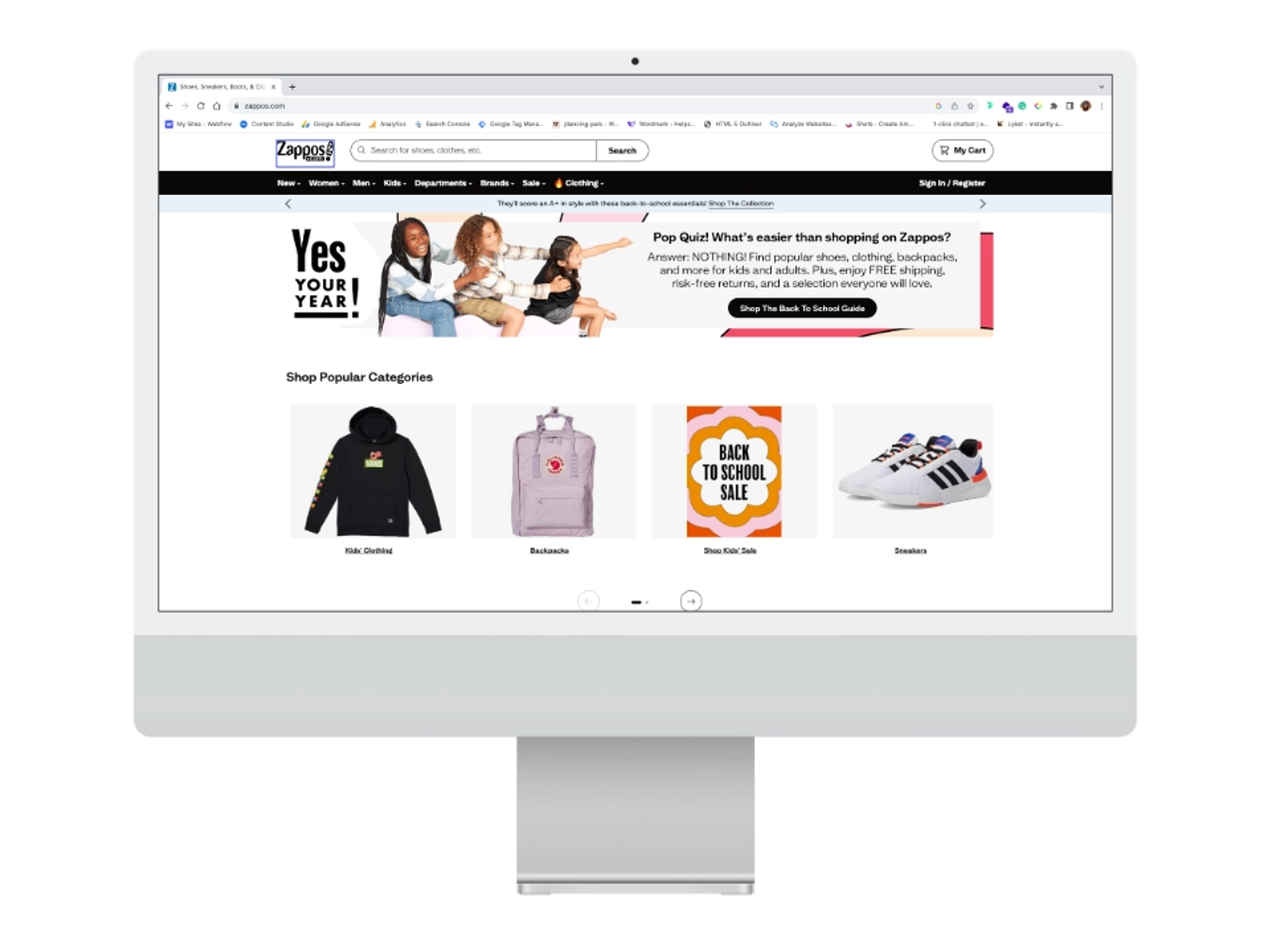
A popular website with a large catalog. Look at how a retailer like Zappos organizes search, filtering and returns. The lesson for a smaller online business is that navigation is the product, not a menu.
A specialist consultancy. Four or five pages, a very specific positioning line, two case studies and a booking link. Small websites convert well when they are certain about who they are for.
A studio portfolio. Full-width work, minimal chrome, project pages that end with a contact route. Restraint is what makes the work look expensive.
The common thread across these websites to inspire you is that each one has decided what it is. A professional website that is unclear about its own purpose asks the visitor to work that out, and most visitors decline.
Questions About Types of Websites
What are the different types of websites for businesses?
The main ones are business or brochure sites, marketing websites, e-commerce websites, portfolio websites, blog websites, landing pages, booking websites, membership sites, directory websites, education websites, event websites and personal websites. Most businesses use one primary type with elements of one or two others.
How many types of websites are there?
Lists range from five to twenty-eight, depending on how finely you slice them. The number is not important. What matters is which shape matches how your business earns.
What are the most popular types of websites?
Business and marketing sites, e-commerce stores, blogs and portfolio websites cover the large majority of what small and medium businesses build.
What is the difference between a website and a landing page?
A website has multiple pages and navigation. A landing page is a single page with one offer and usually no navigation at all, built for a specific campaign and measured on one conversion.
What is the most cost-effective type of website for a new business?
A small business website of five to eight well-written pages. It builds trust, costs little to maintain, and can grow into a marketing website as demand appears.
What is the easiest type of website to build?
A landing page, followed by a simple brochure site. Both work well on any website builder and need no ongoing operational work beyond keeping the content current.
Can I change my website type later?
Yes, and it is normal. A brochure site becomes a marketing website; a marketing website adds a store. Changing is far easier when the original was built on a clear structure rather than assembled page by page.
Choosing Well the First Time
Deciding which type of website you need is a business question wearing a design costume. The various types of websites above are distinct types with distinct running costs, and answering the question properly makes every later decision easier, from the page structure to the budget.
That is where we start at Dancing Pels on every Custom Websites project: what the site is for, who it is for, and what has to happen on it. Once the shape is right, filling it with the right visitors is Growth Marketing.
If you are not sure which type of website your business actually needs, book a discovery call and we will work it out before anyone designs anything.